Structural Integrity of 8mm Chequered Plate Weight Specifications
Release time:2026-02-18 Click:18
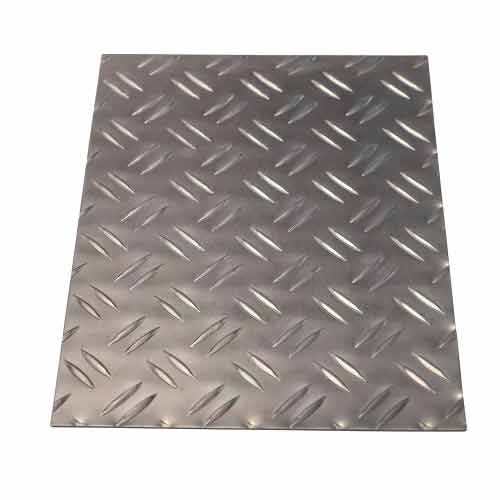
In structural engineering and heavy industry, the load-bearing capacity of a floor or platform is determined by the thickness and material properties of the cladding. The 8mm chequered plate weight is a critical specification that engineers use to calculate dead loads and ensure safety margins. "Chequered plate" (also known as diamond plate or tread plate) features a raised pattern of diamonds or lines on one side, providing slip resistance while maintaining the structural strength of the underlying steel. An 8mm thickness is considered a heavy-duty standard, commonly used in truck floors, mezzanine decks, and industrial walkways where forklifts or heavy machinery operate. The weight per square meter for an 8mm mild steel chequered plate is approximately 63 kg/m2, a figure derived from the density of steel (7.85 g/cm3) multiplied by the thickness.
The pattern on a 8mm chequered plate weight calculation is more than just aesthetic; it adds structural rigidity. The raised diamonds act as stiffeners, increasing the plate's moment of inertia and allowing it to span wider distances without sagging under point loads. This is crucial in applications like loading docks, where a single forklift wheel can exert immense pressure on a small area. The chequered surface also reduces the risk of "hydroplaning" in wet conditions; the grooves channel water away from the contact patch, maintaining friction even when the surface is oily or covered in mud. For comparison, a flat plate of the same thickness would be significantly more slippery and prone to bending.
When specifying 8mm chequered plate weight, engineers must also consider the material grade. Mild steel (S235 or S275) is the most common, offering a good balance of strength and weldability. However, in corrosive environments like chemical plants or offshore platforms, stainless steel (304 or 316) or aluminum chequered plates are used. While aluminum is lighter (approximately 21 kg/m2 for 8mm thickness), it has a lower yield strength and is more expensive. The weight calculation is vital for transportation logistics; a standard 2m x 1m plate weighs over 120 kg, requiring cranes or forklifts for installation. This weight also contributes to the "dead load" of the structure, which must be accounted for in the foundation design to prevent settlement.
Installation of 8mm chequered plate weight structures requires robust fixing methods. Because the plates are heavy and rigid, they are typically welded to the supporting steel beams using intermittent welds to prevent warping from heat. In some cases, bolted connections are used to allow for replacement. The orientation of the chequered pattern matters; the diamonds should run parallel to the direction of traffic to maximize traction. For stairs, the plate is often used as the tread, the raised pattern providing grip for feet descending steep angles. Maintenance is relatively simple; the plate can be swept or pressure-washed to remove debris that might hide corrosion. If the coating is damaged, rust can be treated with wire brushing and anti-corrosive paint, though the heavy galvanized coating usually provides decades of protection.
Finally, the economic implications of 8mm chequered plate weight are tied to its durability and safety record. While it is more expensive than thinner plates (e.g., 5mm or 6mm), the 8mm thickness offers a superior safety factor against impact and fatigue. In high-traffic areas, thinner plates may dent or puncture under repeated stress, leading to costly repairs and downtime. The heavy weight also dampens vibration, a benefit in factories with heavy stamping or cutting equipment where noise and movement can be disruptive. By choosing the correct weight and thickness, engineers ensure that the infrastructure not only meets building codes but also provides a long-term, low-maintenance solution that protects both personnel and equipment. It is a prime example of how precise material specifications translate into real-world safety and reliability.
Previous article:Add Texture and Character with Embossed Sheet
Next article:Industrial Galvanized Chequered Plate for Warehouse Flooring
Hot products
Mobile: +86 15369215227
Email:metalproducts2022@163.com
Email:1626757181@qq.com