Durable Chequered Plate Designed for Heavy-Duty Industrial Platforms
Release time:2026-03-03 Click:11
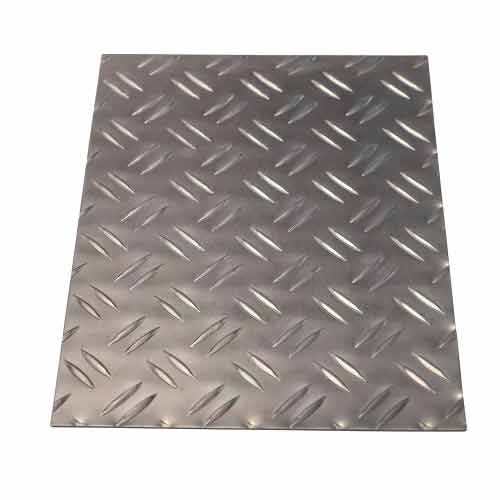
Chequered plate flooring represents the pinnacle of industrial safety and durability, specifically engineered to withstand the most demanding heavy-duty applications. This specialized steel plate features a distinctive raised diamond pattern that provides exceptional slip resistance, even when wet, oil-contaminated, or covered with ice. The raised diamond projections create multiple contact points for footwear, dramatically reducing slip and fall incidents while maintaining sufficient drainage channels for water and debris. The pattern also adds structural rigidity to the plate, allowing for greater span capabilities and reduced support requirements compared to flat plate alternatives.
Manufacturing of heavy-duty chequered plate involves precision rolling and forming processes that create consistent pattern geometry while maintaining the steel's structural properties. High-grade structural steel, typically Grade S235JR or S355JR, undergoes hot rolling to achieve the desired thickness and mechanical properties. The diamond pattern is then formed using precision rollers that create uniform projections with exact dimensions and angles. Surface treatments including shot blasting and protective coatings enhance corrosion resistance while providing a clean, professional appearance suitable for visible installations in commercial and public spaces.
Load-bearing capacity calculations for chequered plate design consider multiple factors including plate thickness, span length, material grade, and anticipated loading conditions. The diamond pattern contributes to load distribution by creating additional structural elements that carry loads through multiple directions. Dynamic loading scenarios, such as forklift traffic and vibrating machinery, require special attention to fatigue resistance and connection details. Engineering analysis ensures that deflection limits are maintained within acceptable parameters, preventing excessive flexing that could compromise safety or cause premature material fatigue.
Installation techniques for heavy-duty chequered plate platforms require specialized knowledge and equipment to achieve optimal performance and longevity. Proper substructure design must account for the concentrated loads created by the raised pattern, requiring adequate support spacing and connection details. Welding procedures must maintain the integrity of both the base plate and pattern projections, ensuring no weak points that could lead to premature failure. Installation tolerances must be carefully controlled to prevent gaps or misalignments that could create trip hazards or compromise the structural continuity of the platform system.
Previous article:The Multifaceted Utility of Metal Plate
Next article:The Enduring Role of Chequered Plate in Modern Infrastructure
Hot products
Mobile: +86 15369215227
Email:metalproducts2022@163.com
Email:1626757181@qq.com