Product details description
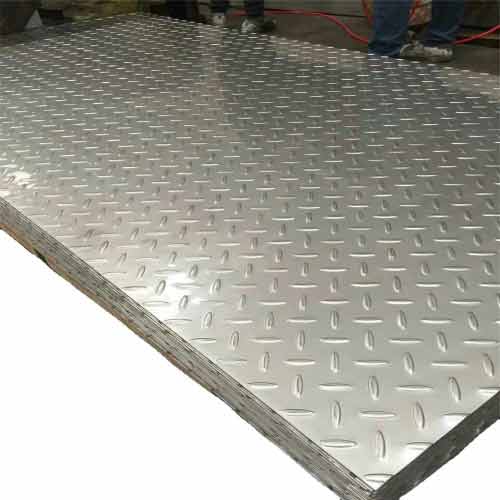
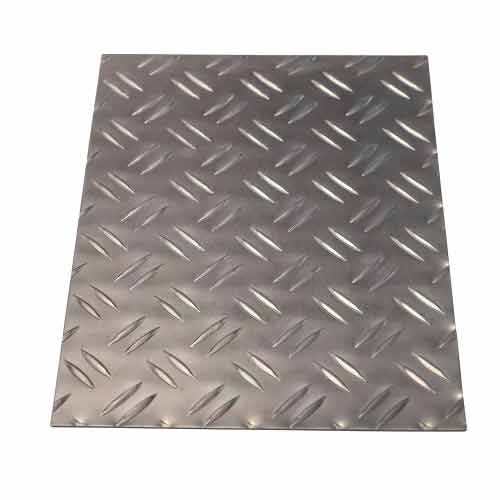
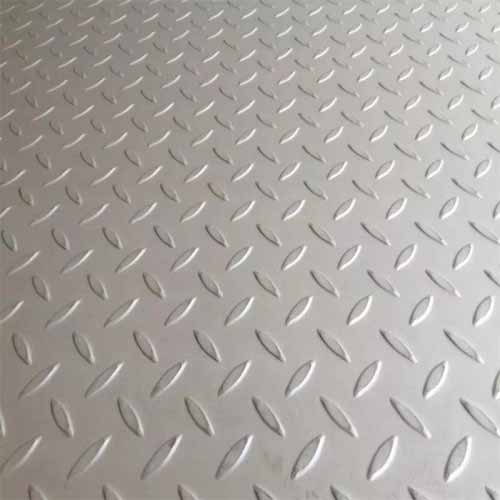
Chequered plates, also known as tread plates or diamond plates, are the
industry standard for vehicle ramps, loading dock walkways, and platform
surfaces. Their iconic raised lug pattern is not merely for aesthetics; it is an
engineered feature fundamentally tied to enhancing load capacity, safety, and
functionality under heavy, dynamic loads.
The primary mechanical role of the pattern is to increase stiffness and
reduce deflection. A flat steel plate of the same thickness will bend more under
a concentrated load, like a truck wheel. The raised diamonds or lugs act like a
series of miniature I-beams or stiffening ribs, dramatically increasing the
plate's section modulus—a measure of its resistance to bending. This allows a
chequered plate to span longer distances between support beams without sagging
dangerously, or to use a thinner gauge of steel to achieve the same strength as
a thicker smooth plate, saving weight and material cost.
For load capacity analysis, engineers consider the plate as a structural
element. Key factors include: the steel grade (e.g., A36, AR400), plate
thickness (measured at the thin areas, not the lugs), the spacing and size of
supporting beams underneath, and the type of load (static vs. dynamic, point
load from a forklift wheel vs. uniformly distributed load). The pattern helps
distribute point loads over a slightly wider area, reducing stress
concentration. Calculations must ensure that under the maximum expected load
(e.g., a fully laden forklift), the plate's stress remains below the steel's
yield strength and deflection is within safe limits to prevent fatigue
failure.
The safety function is paramount. The raised pattern provides superior slip
resistance, channeling water, oil, and debris away from the foot or tire contact
patch. This anti-slip property is crucial for maintaining traction on inclines
(ramps) and in wet conditions, preventing accidents. The pattern also helps to
dampen vibration and noise from rolling traffic, making the work environment
safer and less fatiguing.
In practical application, selecting the right chequered plate involves
matching its rated load capacity to the application's demands. For light vehicle
ramps, a standard A36 steel plate may suffice. For heavy-duty loading docks
subject to constant 10,000-lb forklift traffic, a thicker, high-strength
low-alloy (HSLA) or abrasion-resistant (AR) steel plate will be specified. The
analysis ensures that the plate will not permanently deform or fail under load,
making it an indispensable, high-strength, anti-slip surfacing solution that
directly contributes to the structural integrity and operational safety of
industrial facilities.
Previous article:
Calculating Load Capacity: The 4mm Chequered Plate Weight
Next article:
Chequered Plate Maintenance Protocols: Cleaning Methods and Surface Protection Treatments